

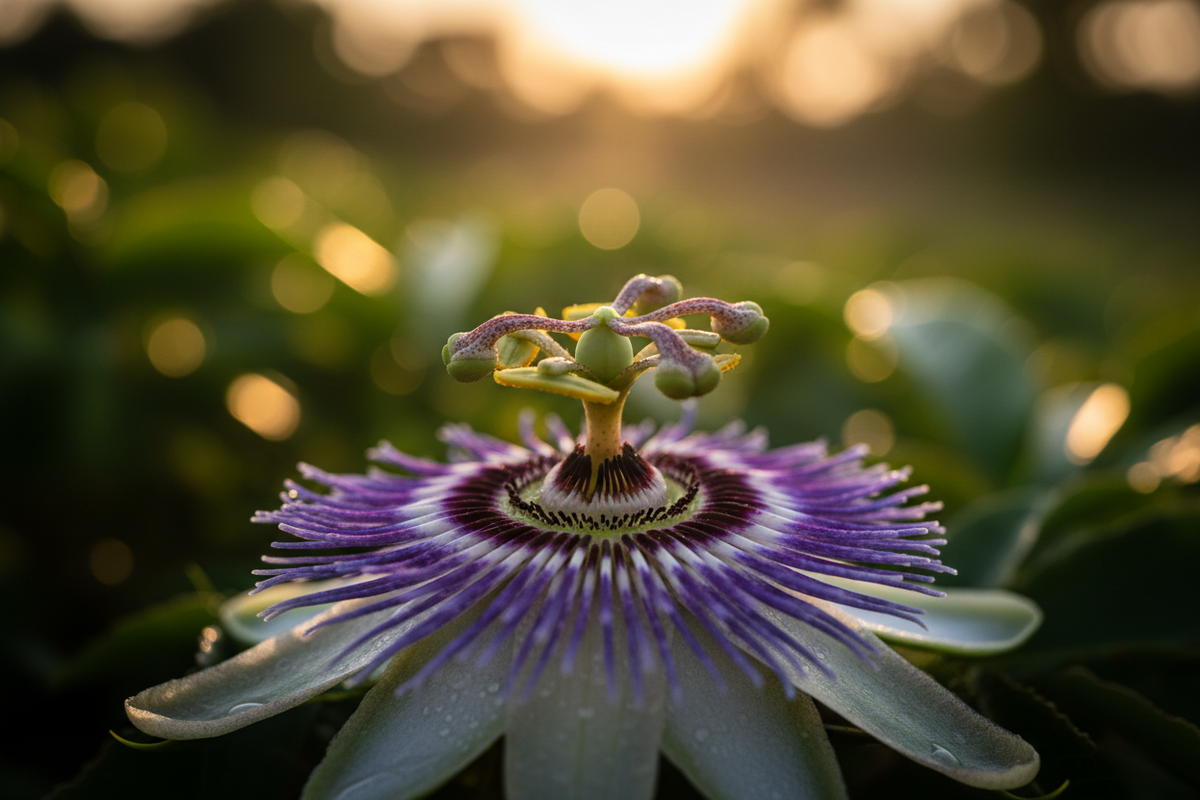
Passion Flower Extract: Benefits, Dosage, Safety, Research, and Why We Use It
Executive Summary
Passion flower extract is made from the above-ground parts of Passiflora incarnata, a climbing plant also called passionflower or maypop. It has a long history of traditional use for restlessness, mild stress, and sleep, but modern clinical research remains much smaller than the marketing around it may suggest.
The best human evidence points to two possible uses: helping some adults wind down before sleep and reducing short-term anxiety in situations such as surgery or dental procedures. Even in these areas, the evidence is preliminary. Trials have generally been small, short, and conducted with extracts that are not necessarily equivalent to one another.
Passion flower appears to influence gamma-aminobutyric acid, better known as GABA, which acts like a braking signal in the nervous system. That mechanism is biologically plausible, but most mechanistic evidence comes from laboratory and animal research. It does not prove that every passion flower supplement has a clinically meaningful calming effect in people.
Short-term tolerability appears reasonably favorable in healthy adults. Possible side effects include drowsiness, dizziness, and confusion. Passion flower should not be used during pregnancy, should be approached cautiously with sedating medications or alcohol, and should be discussed with the surgical team before anesthesia. Long-term safety has not been established.
Sleep Control provides 90 mg of passion flower extract per two-capsule serving as part of a broader sleep and recovery formula. We use it as a complementary botanical, not as a stand-alone treatment and not because the evidence is definitive. Its role is to add a different, potentially calming pathway alongside ingredients such as magnesium bisglycinate, L-theanine, L-tryptophan, and chamomile.
The people most likely to consider passion flower are generally healthy adults with occasional stress-related difficulty winding down who understand that sleep habits still matter. People with persistent insomnia, severe anxiety, loud snoring, breathing pauses during sleep, restless legs, depression, or daytime impairment need a proper clinical evaluation rather than a stronger supplement stack.
Bottom line: Passion flower extract is a reasonable but still preliminary ingredient for relaxation and sleep support. The science is promising enough to justify interest, but not strong enough to treat all extracts as interchangeable or to describe passion flower as a proven insomnia or anxiety therapy. The National Center for Complementary and Integrative Health reaches a similarly cautious conclusion.
Contents
- What Is Passion Flower Extract?
- Ingredient Overview
- How Passion Flower Extract Works in the Body
- Key Health Benefits
- Evidence Snapshot
- Who May Benefit Most?
- Why Take Control Science Uses This Ingredient
- Why Dosage Matters
- Clinical Research
- Scientific Consensus
- Bioavailability and Absorption
- Safety Profile, Side Effects, and Contraindications
- Myth vs Fact
- Recent Scientific Developments
- Frequently Asked Questions
- Take Control Science Perspective
- Key Takeaways
- References
What Is Passion Flower Extract?
A Botanical Extract From Passiflora incarnata
Passion flower extract is a concentrated preparation made from the medicinal parts of Passiflora incarnata L., a perennial climbing vine in the Passifloraceae family. In everyday language, the plant may be called passionflower, passion flower, purple passionflower, or maypop. In scientific writing, the one-word spelling “passionflower” is common, while supplement labels often use “passion flower.”
The medicinal material is usually the aerial portion of the plant: the leaves, stems, flowers, and sometimes developing fruit located above the soil. The European Medicines Agency herbal summary defines passion flower herb in this way. This matters because a product made from an unspecified plant part cannot automatically be assumed to match the materials used in clinical studies or traditional monographs.
Passionflower Is Not the Same as Passion Fruit
Passionflower supplements and passion fruit foods are related botanically, but they are not interchangeable. The common edible passion fruit is usually produced by Passiflora edulis. Most medicinal research discussed in this article concerns Passiflora incarnata. Drinking passion fruit juice is therefore not the same as taking a characterized passion flower extract, and the nutrition of the fruit does not tell us the pharmacology of the herb.
Discovery and Historical Use
Species in the Passiflora genus are native to the Americas. Passiflora incarnata grows naturally in parts of the southeastern and south-central United States and has also been cultivated elsewhere. The plant was used traditionally in the Americas and later entered European herbal medicine, where preparations were used for restlessness, nervous tension, and sleep.
The name “passion flower” does not refer to romantic passion. European observers associated the unusual structure of the flower with symbols of the Christian Passion. That naming history is culturally interesting, but it does not establish medicinal effectiveness. Traditional use can identify worthwhile research questions; it cannot replace controlled human trials.
Natural Sources and Biological Role
Passion flower extract comes from the plant itself. It is not an essential vitamin, mineral, amino acid, or fatty acid. The human body does not make passion flower compounds, and there is no dietary requirement, Recommended Dietary Allowance, or established Daily Value for passion flower.
Because it is not a nutrient, the goal of supplementation is not to correct a passion flower deficiency. The rationale is pharmacologic: naturally occurring plant compounds may temporarily influence signaling pathways involved in arousal, stress, and sleep. That distinction is important. A supplement can have biological effects without being nutritionally essential.
How Passion Flower Extract Is Manufactured
A responsible manufacturing process begins with botanical identity. The supplier should confirm the correct species and plant part, then control cultivation or collection, drying, and storage. The dried herb may be milled into powder or extracted with water, ethanol, glycerol, or a combination of solvents. The liquid is filtered and concentrated, and it may be dried into a powder for capsules or tablets.
After extraction, quality testing should address identity, microbial contamination, heavy metals, pesticides, residual solvents when relevant, and consistency between lots. Some products are standardized to total flavonoids expressed as vitexin or to another marker compound. Standardization can improve consistency, but it does not prove that the marker is the sole active ingredient or that the product will reproduce a particular clinical trial.
The EMA herbal monograph lists several passion flower preparations with different drug-to-extract ratios and solvents. This is a practical reminder that “100 mg of extract” is incomplete information. Two 100 mg extracts may represent very different amounts of starting herb and very different chemical profiles.
Common Supplement Forms
Passion flower is sold as dried herb for tea, powdered herb, liquid tincture, fluid extract, dry extract, capsule, tablet, and multi-ingredient sleep or relaxation formula. These forms can differ in concentration, onset, taste, alcohol content, stability, and dosing precision.
A tea may provide a broad water-soluble mixture but is difficult to compare with a dry hydroalcoholic extract. A tincture may extract different constituents and is commonly labeled by a ratio such as 1:5 or 1:8. A dry extract may use a native drug-extract ratio, sometimes abbreviated DER, to show how much starting plant produced the extract. Without those details, milligram comparisons are weak.
Passion Flower Compared With Valerian
Passion flower and valerian are both marketed for sleep and relaxation, but they are different botanicals with different chemistry and evidence bases. Valerian research is larger but still inconsistent. Passion flower has fewer trials and somewhat more direct research on short-term procedural anxiety. Neither should be described as a guaranteed natural sedative, and products containing both may produce additive drowsiness.
Passion Flower Compared With Chamomile
Chamomile and passion flower are both traditional calming herbs. Chamomile is commonly consumed as tea and contains apigenin and related compounds. Passion flower contains a different mixture of flavonoids and has laboratory evidence involving the GABA system. Combining them may be reasonable from a formulation perspective, but there is not strong human evidence proving that the combination is synergistic.
Passion Flower Compared With Melatonin and L-Theanine
Melatonin is a hormone involved in circadian timing. It is most biologically suited to problems involving the body clock, such as jet lag or delayed sleep timing, rather than every form of insomnia. L-theanine is an amino acid found in tea and is studied primarily for relaxation and stress-related outcomes. Passion flower is neither a hormone nor an amino acid; it is a botanical mixture that may influence inhibitory signaling and arousal. These ingredients are not direct substitutes.
Practical takeaway: The words “passion flower extract” do not fully identify a product. Species, plant part, extraction method, concentration, and quality testing all influence what is actually in the capsule.
Ingredient Overview
Why Sleep and Stress Biology Are Closely Connected
Sleep is not simply the absence of wakefulness. It is an actively regulated state shaped by circadian timing, sleep pressure, light exposure, temperature, behavior, and brain signaling. Stress can interfere with this transition by keeping the nervous system in a state of vigilance. A tired person can therefore feel exhausted and still be unable to switch off.
This pattern is sometimes called hyperarousal. Thoughts continue, the body feels tense, and small concerns become more noticeable in a quiet room. A calming ingredient may be most relevant when difficulty sleeping is linked to this type of short-term arousal. It is much less likely to solve sleep apnea, restless legs syndrome, medication side effects, untreated depression, pain, or a misaligned body clock.
Why People Supplement With Passion Flower
Most people use passion flower for one of three reasons: to feel calmer in the evening, to support sleep, or to reduce situational nervousness. Some prefer a melatonin-free approach. Others encounter passion flower as one part of a broader formula rather than as a stand-alone herb.
The appeal is understandable. A nonprescription botanical that supports relaxation without major next-day impairment would be useful. The scientific question is whether the effect is reliable, clinically meaningful, and consistent across products. At present, the answer is not yet clear.
Current Scientific Consensus
Research supports biological plausibility and provides several positive human signals, but certainty remains low. The NCCIH passionflower review notes that small studies suggest possible benefits for anxiety and total sleep time, while also emphasizing that conclusions are not definite and that results for falling asleep and staying asleep are mixed.
The European Medicines Agency recognizes passion flower for traditional use in the relief of mild mental stress and as an aid to sleep. “Traditional use” is a regulatory category based on longstanding use and plausible safety, not the same as “well-established use” supported by a robust modern clinical evidence package.
There Is No Passion Flower Deficiency
Unlike magnesium, iron, or vitamin D, passion flower does not correct an established nutrient deficiency. There is no blood test that tells a person they need passion flower. A reasonable decision to use it therefore depends on symptoms, goals, product quality, competing explanations for the problem, and the balance between possible benefit and possible sedation.
The Practical Overview
Passion flower is best viewed as an optional short-term support tool. It may help some adults feel less activated or sleep a little longer, but it should sit behind the foundations of sleep: a regular wake time, morning light, appropriate caffeine timing, adequate physical activity, a dark and cool bedroom, and treatment of underlying medical or psychological conditions.
For chronic insomnia, behavioral treatment has a much stronger evidence base. The American College of Physicians guideline recommends cognitive behavioral therapy for insomnia, or CBT-I, as first-line treatment for adults with chronic insomnia. A botanical should not displace that standard.
Readers interested in how Take Control Science evaluates evidence across ingredients can explore the Take Control Science science library and the broader Ingredient Library.
Practical takeaway: Passion flower may be most relevant as short-term support for stress-related winding down, not as a universal answer to every sleep problem.
How Passion Flower Extract Works in the Body
It May Influence the GABA System
GABA is one of the brain’s main inhibitory neurotransmitters. Think of excitatory signaling as the accelerator and GABA signaling as part of the braking system. The brain needs both. During the transition toward sleep, inhibitory signaling helps reduce the intensity and spread of wake-promoting activity.
Laboratory research suggests that some passion flower extracts can affect the GABA system. In a 2011 study, a characterized extract influenced GABA uptake and receptor-related signaling in laboratory models. Other cell and animal studies have reported effects on GABA currents and anxiety-like behavior.
Evidence Strength: Preliminary Evidence. These findings explain why a calming effect is plausible, but they do not prove a clinically meaningful effect in humans. Passion flower is a complex botanical mixture, not a purified GABA drug. It should not be described as “natural Xanax,” and its action cannot be assumed to match benzodiazepines.
It May Reduce Hyperarousal Rather Than Directly “Knock You Out”
Many people with stress-related sleep difficulty do not need a stronger sedative signal as much as they need less arousal. If passion flower modestly supports inhibitory signaling, it may make the transition from alertness to rest easier. That could show up as feeling calmer, spending less time mentally rehearsing problems, or sleeping somewhat longer.
This distinction helps explain why trial results are mixed. A person whose sleep difficulty is driven by temporary mental activation may respond differently from a person with obstructive sleep apnea, chronic pain, circadian delay, or stimulant exposure. A calming pathway does not correct every cause of poor sleep.
Evidence Strength: Preliminary Evidence. Human trials support a possible effect on subjective sleep quality or total sleep time, but they have not consistently shown improvements across all measures of sleep onset, awakenings, and daytime function.
Flavonoids May Contribute to the Extract’s Activity
Passion flower contains several flavonoids, including C-glycosyl flavones such as vitexin-related compounds, isovitexin, isoorientin, schaftoside, and others. These compounds are useful chemical fingerprints for identity and quality control. They may also contribute to biological activity.
However, no single constituent has been conclusively established as the human active ingredient responsible for sleep or anxiety effects. Standardizing an extract to vitexin can make batches more consistent, but it does not turn vitexin into a proven surrogate for clinical effectiveness.
Evidence Strength: Limited Evidence. The phytochemistry is well described, but the connection between a specific marker level and a clinically meaningful outcome remains uncertain.
Extraction Method Can Change the Biological Effect
A botanical is not one molecule. Water, ethanol, temperature, processing time, plant part, harvest conditions, and storage can all change the mixture that reaches the final product. In a notable laboratory and animal study, different passion flower extracts produced meaningfully different effects, including differences in the direction of behavioral responses.
This is one of the most important lessons in passion flower research. A positive study on one extract is not proof that every tea, tincture, capsule, or gummy will behave the same way. Product identity is part of the evidence.
Evidence Strength: Moderate Evidence for product variability; Limited Evidence for its clinical consequences. Chemistry and preclinical effects clearly vary by preparation. Human head-to-head comparisons are still lacking.
It May Affect Sleep Continuity More Than Sleep Initiation
One placebo-controlled insomnia trial found an increase in total sleep time of roughly 23 minutes with a specific extract over two weeks, while several other sleep measures were not clearly different from placebo. NCCIH similarly notes that total sleep time may improve while findings for falling asleep and staying asleep remain mixed.
Evidence Strength: Preliminary Evidence. The signal is interesting but not stable enough to conclude that passion flower reliably shortens sleep latency, prevents awakenings, or increases restorative sleep stages.
Human Pharmacology Is Still Poorly Defined
Researchers do not yet have a validated blood level, target concentration, or established pharmacokinetic model for passion flower extract. We do not know which combination of compounds must be absorbed, how rapidly each is metabolized, or which marker best predicts clinical response.
This uncertainty is not unusual for botanicals, but it limits precision. It also means that claims about exact onset, duration, or dose-response should be treated cautiously unless they refer to a specific studied preparation.
Practical takeaway: Passion flower’s most plausible role is to modestly support inhibitory signaling and reduce arousal, but the human mechanism and the clinically active constituents remain incompletely defined.
Key Health Benefits
May Support Subjective Sleep Quality and Total Sleep Time
Evidence Strength: Preliminary Evidence. Several small human trials suggest that passion flower may improve one or more sleep outcomes. A 2011 crossover study in healthy young adults found better self-rated sleep quality after one week of passionflower tea. A 2020 placebo-controlled trial in adults with insomnia found a modest increase in total sleep time with a specific 60 mg extract over two weeks. A 2024 trial in adults with stress and sleep problems also reported improvements in several subjective sleep measures with a proprietary extract.
Biological explanation: By influencing inhibitory GABA-related signaling, passion flower may help reduce the mental and physiologic activation that interferes with the transition into sleep.
Limitations: The studies were short, used different preparations, enrolled relatively small samples, and did not consistently improve all objective and subjective measures. One positive questionnaire score is not the same as a broad improvement in sleep architecture or daytime function.
Who may benefit: The most plausible group is otherwise healthy adults whose occasional sleep difficulty is closely tied to stress or difficulty winding down. People with chronic insomnia or suspected sleep disorders need evaluation and evidence-based treatment.
Practical interpretation: Passion flower may provide a modest assist for some people, but it should not be sold as a proven cure for insomnia or as a substitute for CBT-I.
May Support Calm Before Stressful Procedures
Evidence Strength: Preliminary Evidence. Small randomized studies have evaluated passion flower before outpatient surgery and dental extraction. A 2008 placebo-controlled study found lower preoperative anxiety after a single 500 mg dose without a clear difference in psychomotor recovery. A 2017 crossover trial found that 260 mg of passion flower reduced dental-procedure anxiety to a degree that appeared similar to midazolam on the measured scales, while midazolam caused more amnesia.
Biological explanation: A temporary reduction in central arousal could make a stressful procedure feel more manageable without necessarily producing deep sedation.
Limitations: These trials were small, procedure-specific, and conducted with particular preparations. The dental study lacked a placebo-only comparison and was not designed to establish true equivalence to a prescription drug.
Who may benefit: The evidence is relevant to research settings involving brief, anticipated stress. It does not justify self-medicating before a procedure because passion flower can interact with anesthesia and other sedatives. The surgical or dental team should direct all pre-procedure use.
Practical interpretation: The signal supports further research, not independent preoperative use.
May Reduce Symptoms of Generalized Anxiety
Evidence Strength: Limited Evidence. A small 2001 pilot trial compared passion flower drops with oxazepam in 36 adults with generalized anxiety disorder over four weeks. Symptoms improved in both groups. Oxazepam appeared to act faster, while work-performance impairment was reported more often with oxazepam.
Biological explanation: GABA-related effects could plausibly reduce persistent tension or worry.
Limitations: The study had only 18 participants per group and did not include a placebo-only arm. A lack of statistical difference between two small groups does not prove that passion flower is equivalent to oxazepam, and it does not establish effectiveness beyond placebo.
Who may benefit: This evidence is not sufficient to guide treatment of an anxiety disorder. People with persistent or impairing anxiety should seek clinical care, where psychotherapy, lifestyle interventions, and approved medications can be considered.
Practical interpretation: Passion flower may be an adjunctive topic to discuss with a clinician, but it is not an evidence-based replacement for anxiety treatment.
May Support Short-Term Stress Management
Evidence Strength: Preliminary Evidence. A 2024 randomized trial in 65 adults with stress and sleep problems reported improvements in perceived stress and several sleep-related outcomes after 30 days of a proprietary 600 mg passion flower extract compared with placebo.
Biological explanation: Reducing arousal at night may improve the interaction between perceived stress and sleep. Better sleep can also make the next day feel more manageable, creating a two-way relationship.
Limitations: The trial was small, lasted only one month, used multiple mostly subjective endpoints, and studied a proprietary extract. Industry-related author affiliations increase the importance of independent replication.
Who may benefit: Healthy adults with mild, short-term stress may be the most reasonable population to study further. Severe stress, panic, trauma symptoms, or functional decline should not be managed with a supplement alone.
Practical interpretation: The findings are encouraging but do not raise the evidence above preliminary.
Other Proposed Benefits
Evidence Strength: Insufficient Evidence. Passion flower has been investigated or marketed for attention-deficit/hyperactivity disorder, menopausal symptoms, opioid withdrawal, fibromyalgia, cardiovascular health, seizures, pain, and other conditions. The available human evidence is either too sparse, too indirect, too methodologically weak, or based on multi-ingredient products that do not isolate passion flower.
Mechanistic or animal findings should not be converted into treatment claims. A plant can affect a pathway in a laboratory without producing a safe, reproducible clinical benefit in people.
Practical takeaway: The most credible areas are sleep support and short-term calming, and even those remain preliminary. Broader health claims exceed the current evidence.
Evidence Snapshot
Subjective Sleep Quality — Preliminary Evidence. A small crossover trial of passionflower tea found a statistically significant improvement in self-rated sleep quality after one week. The result is useful as an early signal, but it came from healthy young adults, only a small subset underwent objective sleep testing, and most measured sleep outcomes did not clearly change.
Total Sleep Time in Adults With Insomnia — Preliminary Evidence. A two-week randomized trial of one specific extract found approximately 23 additional minutes of total sleep time compared with placebo. The primary comparison was only narrowly statistically significant, and broader improvements in sleep efficiency, awakenings, and symptom questionnaires were not consistently demonstrated.
Stress-Related Sleep Problems — Preliminary Evidence. A 30-day randomized trial using a proprietary 600 mg extract reported improvements in perceived stress and several sleep outcomes. The study was small, short, and dependent largely on subjective measures, so independent replication is needed.
Preoperative or Predental Anxiety — Preliminary Evidence. Several small trials suggest that a single dose may reduce anxiety before a stressful procedure. These findings do not authorize self-treatment before surgery because interaction with anesthesia and other sedatives is a separate safety concern.
Generalized Anxiety Disorder — Limited Evidence. One small active-comparator pilot study found improvement with both passion flower and oxazepam. Without a placebo-only group and with only 36 participants, the study cannot establish that passion flower is effective or equivalent to a prescription medication.
GABA-Related Mechanisms — Preliminary Evidence. Cell, tissue, and animal studies support a plausible effect on GABA signaling. Human target-engagement studies are lacking, and different extraction methods produce different chemical and biological profiles.
Long-Term Use — Insufficient Evidence. Clinical trials have generally lasted days to several weeks. There is not enough high-quality evidence to characterize safety, effectiveness, tolerance, or withdrawal with continuous long-term use.
Other Health Claims — Insufficient Evidence. Research does not currently support confident claims for ADHD, menopause, opioid withdrawal, fibromyalgia, heart conditions, seizures, or broad cognitive benefits.
Overall evidence conclusion: No major passion flower outcome currently qualifies as Strong Evidence or Moderate Evidence for a consistent clinical benefit. The most defensible rating is Preliminary Evidence for sleep support and short-term situational anxiety, with Limited or Insufficient Evidence elsewhere.
Who May Benefit Most?
Adults Who Occasionally Have Trouble Winding Down
Passion flower is most biologically relevant when sleep difficulty occurs alongside temporary mental or physical arousal. An otherwise healthy adult who feels tired but “wired” after a demanding day may be a more plausible candidate than someone whose sleep problem comes from breathing obstruction, pain, an irregular work schedule, or a medication.
The phrase “occasionally” matters. Persistent symptoms deserve a diagnosis. A supplement can soften a symptom while leaving the actual cause untouched.
Adults With Mild, Short-Term Stress
Small human studies suggest a possible calming effect in stressful settings. Passion flower may therefore be reasonable for some healthy adults seeking gentle, short-term support while they continue to address workload, recovery, exercise, social support, and other sources of stress.
It is not appropriate to reduce severe anxiety, panic attacks, trauma symptoms, or major functional impairment to a supplement question. Those situations need individualized clinical care.
People Seeking a Melatonin-Free Bedtime Formula
Some people prefer not to take melatonin because they do not have a circadian-timing problem, dislike vivid dreams, or simply want a different approach. Passion flower offers a nonhormonal botanical option. That does not make it inherently safer or more effective; it simply works through a different proposed pathway.
A melatonin-free label should never be interpreted as a sedation-free label. Passion flower can still cause drowsiness and can add to the effects of other calming ingredients.
People Using a Multi-Ingredient Sleep Strategy
Passion flower may make the most formulation sense as one part of a carefully designed product that addresses several aspects of winding down. Different ingredients can be selected for complementary biological rationales, but “complementary” is not the same as clinically proven synergy.
When evaluating a combination product, the total formula matters. A person should consider every sedating ingredient, every medication, and the serving size rather than judging passion flower in isolation.
People Who Are Less Likely to Benefit
Passion flower is unlikely to correct untreated sleep apnea, restless legs syndrome, nocturnal reflux, uncontrolled pain, severe depression, bipolar mania, hyperthyroidism, stimulant overuse, alcohol-related sleep disruption, or a deeply misaligned sleep schedule. It also cannot compensate for a variable wake time, late caffeine, bright nighttime light, or chronically insufficient time in bed.
People Who Should Avoid Self-Directed Use
Pregnant people, children, people preparing for surgery, people using sedating medications, and those with significant kidney or liver disease should seek professional guidance or avoid use as discussed in the safety section. Older adults should be especially cautious about dizziness, confusion, and falls.
Practical takeaway: The best candidate is a generally healthy adult with occasional, stress-linked difficulty winding down who understands that passion flower is supportive rather than corrective.
Why Take Control Science Uses This Ingredient
It Adds a Distinct Botanical Rationale
Take Control Science uses passion flower in Sleep Control because sleep is not governed by one switch. The formula includes ingredients selected to support different parts of the evening transition rather than relying on a single high-dose sedative ingredient.
Passion flower contributes a botanical rationale centered on calming and GABA-related signaling. Magnesium supports normal neuromuscular and nervous-system function. L-theanine has been studied for relaxation. L-tryptophan is an amino-acid precursor within serotonin and melatonin biology. Chamomile provides a second traditional botanical with a different constituent profile. These rationales are complementary on paper, but the finished combination has not been proven clinically superior to its individual components.
The Verified Label Dose Is 90 mg Per Serving
The current label supplied for this article lists 90 mg of passion flower extract per serving of two vegetarian capsules. That number is verified from the product label, but the label image alone does not identify the species, plant part, extraction solvent, native drug-extract ratio, or marker standardization.
Editorial Note: Before publication, verify from the current raw-material specification that the ingredient is Passiflora incarnata L. aerial-parts extract and confirm the drug-extract ratio, extraction solvent, and any standardization marker. Without those details, the 90 mg amount cannot be directly compared with the extracts used in clinical trials.
We Do Not Present Preliminary Evidence as Certainty
We use passion flower because the ingredient has a credible traditional history, a plausible mechanism, and several encouraging human studies. We do not use those facts to claim that it treats insomnia or anxiety. The evidence is still preliminary, and an honest formulation rationale should say so.
The Take Control Science quality standards reflect the same principle: an ingredient should be evaluated by identity, dose, safety, and evidence rather than by the excitement of its marketing story.
Why It Fits With Magnesium Bisglycinate
Magnesium and passion flower are not interchangeable. Magnesium is an essential mineral with broad physiologic roles; passion flower is a nonessential botanical used for a targeted calming effect. Combining them allows the formula to include both foundational mineral support and a botanical pathway without pretending that either ingredient is a sleeping pill.
Readers who want a deeper explanation of the mineral form can review our article on magnesium bisglycinate benefits, dosage, and safety.
Why We Did Not Choose Passion Flower as a Stand-Alone Solution
The research does not justify treating passion flower as a complete sleep intervention. A multi-ingredient formulation can acknowledge that sleep quality depends on several systems and that no botanical should carry an exaggerated promise. The formula also sits within a larger philosophy: supplements support healthy routines; they do not replace them.
What the Formula Does Not Prove
Evidence on individual ingredients cannot be added together like points on a scoreboard. A study of one passion flower extract, a separate study of L-theanine, and another study of magnesium do not automatically prove that the finished product produces the sum of those effects. Unless a complete formula is tested in an appropriate randomized trial, claims must remain grounded in the individual ingredients and in conservative formulation logic.
Practical takeaway: We use 90 mg of passion flower extract as a supporting botanical within Sleep Control, while openly acknowledging that exact extract specifications and finished-formula outcomes matter more than the ingredient name alone.
Why Dosage Matters
There Is No Official Daily Requirement
Passion flower is not an essential nutrient, so there is no RDA, Adequate Intake, Daily Value, or established upper intake level. A useful dose must be tied to a specific preparation, intended use, population, duration, and safety context.
Clinically Studied Dose Ranges
Human studies have used very different preparations. Examples include one cup of passionflower tea nightly for one week, 60 mg per day of a specific dry extract for two weeks in adults with insomnia, 600 mg per day of a proprietary extract for 30 days in adults with stress and sleep problems, 260 mg before dental extraction, and 500 mg before outpatient surgery.
These numbers should not be combined into a generic “60 to 600 mg clinical range.” The 60 mg and 600 mg products may differ in concentration, solvent, starting-herb equivalence, marker profile, and manufacturing. A lower number can represent a more concentrated extract.
Traditional Herbal Monograph Doses
The EMA traditional-use monograph lists 1 to 2 grams of dried herb prepared as tea and 0.5 to 2 grams of powdered herb per dose, with frequency depending on the preparation. It also lists several liquid extracts with distinct ratios and solvents. These are traditional-use monograph amounts, not proof of modern clinical effectiveness and not direct equivalents to a dry extract capsule.
Typical Supplement Doses
Commercial passion flower products vary widely, and the front-label milligram number may describe powdered herb, native extract, or extract plus carrier. A product that does not disclose the species and extract characteristics is difficult to compare with research, regardless of whether its dose looks high.
A more useful label or specification identifies Passiflora incarnata, aerial parts, the extract ratio, extraction solvent, amount of native extract, and any marker standardization. Third-party testing can further support identity and contaminant control.
How Our Dose Compares
Sleep Control provides 90 mg of passion flower extract per two-capsule serving. Numerically, 90 mg sits near the 60 mg amount used in one insomnia study and below the 260 to 600 mg amounts used in several other trials. That numerical comparison is not enough to infer equivalence.
Until the exact drug-extract ratio and extraction specification are confirmed, the scientifically correct conclusion is simple: our label dose is known, but its starting-herb equivalent and direct relationship to studied extracts are not yet established in this article.
Timing
Sleep studies generally administered passion flower in the evening or at bedtime. Procedural-anxiety studies used single doses roughly 30 to 90 minutes before the event. These designs suggest that same-evening use is reasonable, but they do not establish one universal onset time.
For a combination product, follow the product directions rather than isolating one ingredient’s timing. The first dose should be taken when driving, operating equipment, or making important decisions is no longer necessary.
Food Interactions
There is no well-established food effect for passion flower extract. Research has not clearly shown whether a meal meaningfully increases or decreases absorption. Taking a supplement with food may reduce nonspecific stomach discomfort for some people, while taking it close to a heavy meal can itself affect sleep.
Dose Response
A reliable human dose-response curve has not been established. We do not know that doubling the dose doubles the calming effect, and we do not know the point at which additional exposure adds sedation without adding benefit.
Why More Is Not Always Better
Higher doses can increase the chance of drowsiness, dizziness, confusion, or additive effects with other sedatives. Botanical complexity also means that “more milligrams” may increase many constituents at once. Dose escalation should not be used to compensate for an unidentified sleep disorder or inadequate sleep habits.
Practical takeaway: Passion flower dosage is meaningful only when the extract is fully characterized. Milligrams without species, plant part, ratio, and solvent can create false precision.
Clinical Research
Janda and Colleagues, 2020: Systematic Review of Neuropsychiatric Research
Study type: Systematic review.
Scope: The authors reviewed clinical trials of Passiflora incarnata in neuropsychiatric conditions through October 2019 and identified nine eligible human studies.
Main findings: Several studies reported favorable signals for anxiety, stress, sleep, or related outcomes. Tolerability was generally acceptable in the short term.
Limitations: The trials differed in products, doses, populations, comparators, and outcome measures. Samples were small, methods were often weak, and the evidence could not support a confident pooled estimate. Positive studies in unlike settings cannot be treated as one uniform body of proof.
Practical interpretation: The 2020 systematic review in Nutrients supports continued research but not strong clinical claims.
Ngan and Conduit, 2011: Passionflower Tea and Sleep Quality
Study design: Double-blind, placebo-controlled, repeated-measures crossover trial.
Population: Forty-one healthy adults ages 18 to 35. Ten participants also completed overnight polysomnography.
Duration and dose: Participants consumed passionflower tea and placebo tea during separate one-week periods with a washout between them.
Main findings: Subjective sleep quality was significantly better during the passionflower week. Most other sleep-diary measures did not show a clear difference, and the objective-sleep subgroup was too small to provide a definitive answer.
Limitations: The participants were healthy young adults rather than people with chronic insomnia. The intervention lasted only one week, the objective sample was very small, and tea cannot be assumed equivalent to a capsule extract.
Practical interpretation: The 2011 placebo-controlled tea study provides an early subjective signal, not proof of a robust sleep effect.
Lee and Colleagues, 2020: Polysomnography in Adults With Insomnia
Study design: Double-blind, randomized, placebo-controlled trial.
Population: One hundred ten adults with insomnia were enrolled; 84 were included in the per-protocol analysis.
Duration and dose: Two weeks of a specific passion flower extract at 60 mg per day or placebo.
Main findings: Total sleep time increased by about 23 minutes in the passion flower group compared with essentially no change in the placebo group. The between-group result reached borderline statistical significance. Several other objective and subjective outcomes did not show clear superiority over placebo.
Limitations: The trial was short, used a per-protocol analysis after exclusions and attrition, and evaluated one particular extract. A change in total sleep time does not by itself establish improved daytime function or durable relief.
Practical interpretation: The 2020 insomnia trial is one of the most relevant modern studies, but it supports a modest and preliminary conclusion.
Harit and Colleagues, 2024: Stress and Sleep Problems
Study design: Randomized, double-blind, placebo-controlled clinical trial.
Population: Sixty-five adults ages 18 to 60 with perceived stress and sleep problems; 32 received passion flower and 33 received placebo.
Duration and dose: Thirty days of a proprietary aerial-parts extract at 600 mg per day.
Main findings: The passion flower group improved on perceived stress, total sleep time, insomnia severity, sleep quality, and general-health measures compared with placebo. No adverse events were reported, and routine vital signs and laboratory measures remained stable during the short trial.
Limitations: The sample was small, follow-up lasted one month, several outcomes were subjective, and multiple endpoints increase the risk of chance findings. The proprietary product and industry-linked affiliations make independent replication especially important.
Practical interpretation: The 2024 stress and sleep trial is encouraging but does not establish a class effect for all passion flower extracts.
Movafegh and Colleagues, 2008: Anxiety Before Ambulatory Surgery
Study design: Double-blind, randomized, placebo-controlled study.
Population: Sixty adult patients scheduled for ambulatory surgery.
Timing and dose: A single 500 mg passion flower tablet or placebo 90 minutes before surgery.
Main findings: Preoperative anxiety scores were lower with passion flower. The investigators did not find a significant difference in sedation, psychomotor recovery, or discharge timing.
Limitations: The study was small, involved a single dose in a highly specific context, and does not tell us whether repeated use helps everyday anxiety. The findings also do not override perioperative interaction concerns.
Practical interpretation: The 2008 preoperative trial supports a possible acute calming effect under medical supervision.
Akhondzadeh and Colleagues, 2001: Generalized Anxiety Pilot Trial
Study design: Double-blind randomized active-comparator pilot trial.
Population: Thirty-six outpatients with generalized anxiety disorder, with 18 assigned to each group.
Duration and dose: Four weeks of passion flower extract at 45 drops per day or oxazepam at 30 mg per day, with matched placebos.
Main findings: Anxiety symptoms improved in both groups. Oxazepam appeared to work more quickly, while impairment of job performance was reported more often in the oxazepam group.
Limitations: The study was very small and lacked a placebo-only arm. Failure to detect a difference between two small treatment groups is not evidence that the treatments are equivalent.
Practical interpretation: The 2001 pilot trial is hypothesis-generating and should not be used to replace established anxiety care.
Dantas and Colleagues, 2017: Dental Extraction Anxiety
Study design: Randomized, double-blind crossover trial.
Population: Forty adults undergoing two separate third-molar extraction procedures.
Timing and dose: A single 260 mg passion flower dose before one procedure and 15 mg midazolam before the other.
Main findings: Both interventions reduced measured anxiety, while midazolam caused more amnesia.
Limitations: There was no placebo-only arm, the sample was small, and the trial was not designed to establish formal equivalence. Dental-procedure anxiety is not the same as generalized anxiety or chronic insomnia.
Practical interpretation: The 2017 dental study adds to the situational-anxiety signal but should not be described as proof that passion flower “works like midazolam.”
Miyasaka, Atallah, and Soares, 2007: Cochrane Review
Study type: Cochrane systematic review of passion flower for anxiety disorder.
Main findings: The reviewers found too few relevant randomized trials to draw reliable conclusions. They called for larger, methodologically sound, placebo-controlled studies.
Limitations: The review is older, but its central concern remains current: the evidence base is small and heterogeneous.
Practical interpretation: The Cochrane review is an important counterweight to confident marketing claims.
Lima Neto and Colleagues, 2025: Salivary Biomarkers Before Dental Surgery
Study design: Triple-blind, randomized, parallel-group pilot trial.
Population: Thirty healthy patients ages 16 to 35 undergoing third-molar extraction, with only ten participants per group.
Timing and dose: A single 260 mg compounded passion flower capsule, 7.5 mg midazolam, or placebo 30 minutes before the procedure.
Main findings: Psychological questionnaires did not show clear between-group differences. Some salivary cortisol results favored passion flower or midazolam, and no side effects were reported.
Limitations: The sample was extremely small, biomarker interpretation was complicated, the product was incompletely characterized, and a procedure-specific biomarker result does not establish broad clinical effectiveness.
Practical interpretation: The 2025 pilot trial is interesting but does not materially raise the overall evidence rating.
Practical takeaway: The research contains multiple positive signals, but almost every influential study is limited by small samples, short duration, product variability, or weak comparators.
Scientific Consensus
What Researchers Generally Agree On
Researchers generally agree that Passiflora incarnata has a legitimate history of traditional use for mild stress and sleep, contains biologically active compounds, and has plausible effects on GABA-related signaling. Several small human trials have produced favorable findings, and short-term tolerability in healthy adults appears reasonably acceptable.
There is also broad reason to treat product identity as essential. Passion flower tea, powdered herb, tincture, water extract, and hydroalcoholic dry extract are not automatically equivalent. A study result belongs first to the tested preparation, dose, population, and duration.
What Remains Controversial
The main controversy is not whether passion flower can affect biology. It is whether the clinical effect is large, reliable, and reproducible enough to guide routine use. Studies have not consistently improved sleep onset, nighttime awakenings, objective sleep architecture, next-day function, or clinically diagnosed anxiety.
Researchers also do not know which constituent or combination of constituents best predicts benefit. Flavonoids are useful markers, but a label standardized to vitexin is not automatically clinically validated.
Where More Research Is Needed
The field needs larger preregistered trials using fully characterized extracts, appropriate placebo controls, intention-to-treat analyses, objective sleep measures, and follow-up beyond several weeks. Trials should identify the species, plant part, native drug-extract ratio, solvent, marker profile, and contaminant testing so that replication is possible.
Research should also separate occasional stress-related sleep difficulty from chronic insomnia and other sleep disorders. Combining unlike populations can make a weak average result look more informative than it is.
Common Scientific Misinterpretations
A statistically significant result is not automatically a large or meaningful result. A study showing one improved outcome among many does not prove comprehensive sleep improvement. A small trial finding no difference from an active drug does not prove equivalence. A GABA mechanism in cells does not mean the herb works like a prescription sedative in people.
Marketing Exaggerations
Claims that passion flower “cures insomnia,” “stops anxiety,” “boosts deep sleep,” or “works exactly like benzodiazepines without side effects” go beyond the evidence. So do blanket claims based on traditional use or a single proprietary trial. The scientifically responsible wording is that passion flower has been investigated for relaxation, situational anxiety, and sleep support, with preliminary results.
Practical takeaway: The consensus is cautious optimism: the ingredient is plausible and promising, but the evidence is not yet strong, standardized, or long-term.
Bioavailability and Absorption
Passion Flower Is a Mixture, Not One Absorbed Molecule
Bioavailability describes how much of an ingested substance reaches the circulation in a usable form. That concept is straightforward for a single molecule but harder for a botanical containing many flavonoids and other compounds. Different constituents may be absorbed, transformed by intestinal enzymes or gut microbes, metabolized by the liver, or excreted at different rates.
Human Pharmacokinetic Data Are Limited
There is no widely accepted human pharmacokinetic profile for passion flower extract. Researchers have not established a target blood concentration, reliable half-life, or validated biomarker that connects exposure with sleep or calming effects. Exact claims such as “works in 20 minutes” or “lasts eight hours” are therefore not well supported for the ingredient class.
Extraction Changes What Is Available
Water favors some constituents, while ethanol or mixed solvents can capture a different chemical spectrum. The drug-extract ratio indicates how much starting herb was used, but it does not by itself describe every constituent. Drying conditions, carriers, and storage can also affect stability.
This is why a low-milligram concentrated extract may deliver more starting-herb equivalent than a larger amount of powdered plant. It is also why copying a dose from one trial without matching the extract can be misleading.
Food and Timing
Human studies have not established a meaningful food effect. Bedtime studies generally used evening dosing, but the optimal interval before sleep remains uncertain. For practical use, consistency and safety matter more than false precision: follow the complete product directions, avoid combining the first dose with alcohol or other sedatives, and leave enough time to observe individual drowsiness.
Different Forms
Tea offers a traditional water infusion and may create a useful wind-down ritual, but dose consistency can vary. Tinctures allow flexible dosing but may contain alcohol and depend heavily on extract ratio. Capsules and tablets offer convenience and more precise labeled amounts, yet still require clear botanical specifications. Gummies may add palatability but do not solve questions of extract identity or stability.
Practical Quality Recommendations
- Look for Passiflora incarnata rather than an unspecified Passiflora species.
- Prefer a label or specification that identifies aerial parts.
- Look for the extraction ratio, solvent, and native-extract amount when available.
- Treat standardization as a consistency tool, not proof of effectiveness.
- Choose manufacturers that test identity, microbes, heavy metals, pesticides, and residual solvents as appropriate.
Practical takeaway: Bioavailability cannot be inferred from milligrams alone. A fully characterized extract is more scientifically meaningful than a large but poorly defined dose.
Safety Profile, Side Effects, and Contraindications
General Safety Snapshot
Passion flower appears reasonably well tolerated during short-term use in healthy adults, but the safety database is small. NCCIH states that passionflower tea may be safe for up to seven nights and that a daily extract may be safe for up to eight weeks. These timeframes describe the available evidence, not a guarantee of safety for every product or person.
Possible Side Effects
Reported or plausible side effects include drowsiness, dizziness, confusion, impaired coordination, and nonspecific gastrointestinal discomfort. Because sleep products often contain several calming ingredients, the full formula may be more sedating than passion flower alone.
Driving and Operating Machinery
Do not drive, operate machinery, or perform safety-sensitive work until the individual response is known. The EMA monograph warns that passion flower may impair the ability to drive and use machines. Next-day effects may be more important in older adults, people with low body weight, and people using other sedatives.
Pregnancy
Passion flower should not be used during pregnancy. NCCIH notes concern that it may induce uterine contractions, and robust reproductive-safety data are lacking. “Natural” does not make a botanical appropriate during pregnancy.
Breastfeeding
Safety during breastfeeding has not been established. It is unknown which constituents enter human milk or how an infant might respond. Avoid routine use unless a qualified clinician who understands the complete product recommends it.
Medication and Substance Interactions
Use caution with benzodiazepines, nonbenzodiazepine sleep medicines, sedating antihistamines, opioids, gabapentinoids, antipsychotics, barbiturates, muscle relaxants, alcohol, cannabis, and other calming herbs. Formal interaction studies are sparse, but additive drowsiness, slowed reaction time, confusion, or respiratory risk is biologically plausible.
A case report described neurologic symptoms when a valerian-passion flower product was used with lorazepam, although a single case cannot prove causality. The safest approach is to have a pharmacist or clinician review the full medication and supplement list.
Surgery and Anesthesia
Discuss passion flower with the surgical or anesthesia team and generally stop it at least two weeks before a planned procedure unless the team gives different instructions. The concern is additive central nervous system depression or interaction with anesthetic and perioperative medications. Do not self-administer passion flower to reduce preoperative anxiety.
Kidney or Liver Disease
There is no well-established passion flower dose adjustment for kidney or liver disease because pharmacokinetic and safety data are inadequate. That absence of guidance is not evidence of safety. People with significant organ disease should avoid self-directed use and review the complete formula with a clinician.
Older Adults
Older adults may be more vulnerable to dizziness, confusion, nighttime falls, and interactions with multiple medications. Start with particular caution, avoid combining sedatives, and reconsider any product that causes morning unsteadiness or cognitive change.
Children and Adolescents
The EMA traditional-use monograph does not recommend passion flower for children under 12. Evidence in adolescents is limited, and sleep or anxiety symptoms in a child deserve clinical assessment. A pediatric product should not be chosen solely because the ingredient is botanical.
Allergies
Hypersensitivity is possible with any botanical. Stop use and seek appropriate care for hives, facial or throat swelling, wheezing, severe vomiting, or faintness. People with known allergy to passion flower or a product excipient should avoid it.
Toxicity and Overdose
No established tolerable upper intake level or toxic threshold exists. The absence of many published overdose reports does not define a safe maximum. If a large amount is taken or severe sedation, confusion, breathing difficulty, fainting, or abnormal heart symptoms occur, seek urgent medical guidance.
Long-Term Safety
Long-term daily safety is not established. Trials generally last days to weeks, and robust data on reproductive toxicity, genotoxicity, carcinogenicity, tolerance, and chronic interactions are lacking. Continuous use should be periodically reassessed rather than assumed harmless.
Practical takeaway: Passion flower is usually a short-term, caution-required ingredient. Avoid it in pregnancy, take interaction and surgery risks seriously, and do not ignore persistent symptoms.
Myth vs Fact
Myth: Passion flower extract is the same as passion fruit.
Fact: Medicinal research usually concerns Passiflora incarnata aerial parts, while common edible passion fruit usually comes from Passiflora edulis. Eating the fruit or drinking its juice is not equivalent to taking a characterized herb extract.
Myth: All passion flower extracts are interchangeable.
Fact: Species, plant part, solvent, extract ratio, concentration, and marker profile can all differ. A positive trial on one proprietary extract does not prove that every capsule, tea, tincture, or gummy will produce the same effect.
Myth: Passion flower is a proven treatment for insomnia.
Fact: Small trials suggest possible improvements in subjective sleep quality or total sleep time, but results are mixed and short-term. The correct evidence rating is Preliminary Evidence, not strong proof of insomnia treatment.
Myth: It works exactly like a benzodiazepine.
Fact: Passion flower may influence GABA-related signaling, but that does not make it pharmacologically equivalent to lorazepam, alprazolam, or midazolam. Laboratory mechanism studies cannot establish equal potency, effectiveness, onset, or safety.
Myth: A natural sleep ingredient cannot interact with medication.
Fact: Natural compounds can alter alertness and add to sedating drugs. Caution is warranted with sleep medicines, benzodiazepines, opioids, sedating antihistamines, gabapentinoids, alcohol, cannabis, and other calming products.
Myth: More milligrams always produce better sleep.
Fact: A dose-response relationship has not been established. Higher exposure may add dizziness or sedation without adding benefit, and milligram numbers cannot be compared meaningfully when extract concentration differs.
Myth: Ninety milligrams of extract equals 90 milligrams of dried herb.
Fact: A concentrated extract may represent several times its weight in starting plant, while another product may include carriers or a weaker ratio. The native drug-extract ratio is needed to translate extract mass into approximate herb equivalent.
Myth: Standardized to vitexin means clinically proven.
Fact: Vitexin-related measurements can help manufacturers maintain chemical consistency. They do not establish that vitexin alone causes the effect or that the product matches a successful clinical trial.
Myth: Passion flower is safe during pregnancy because it is an herb.
Fact: It should be avoided during pregnancy. Concern exists about uterine contractions, and adequate reproductive-safety data are not available.
Myth: A positive preoperative study means it is safe to take before surgery.
Fact: Research use under supervision is not permission for self-use. Passion flower may add to anesthesia or sedatives, and NCCIH advises discussing or stopping it before surgery.
Myth: A supplement can replace sleep habits or CBT-I.
Fact: Chronic insomnia responds best to evidence-based behavioral treatment, especially CBT-I. No botanical compensates reliably for irregular sleep schedules, late caffeine, nighttime light, untreated sleep apnea, or inadequate time in bed.
Myth: Melatonin-free means side-effect-free.
Fact: Passion flower is nonhormonal, but it can still cause drowsiness, dizziness, or confusion. The safety of a formula depends on all ingredients, medications, alcohol use, health conditions, and the individual response.
Myth: Long traditional use proves modern effectiveness.
Fact: Traditional use can support plausibility and guide research, but it cannot quantify benefit, define the best dose, identify interactions, or replace randomized controlled trials.
Practical takeaway: Most passion flower myths come from treating a complex, preliminary botanical as though it were a standardized and fully proven drug.
Recent Scientific Developments
The 2024 Stress and Sleep Trial
A 2024 randomized placebo-controlled trial added a positive 30-day signal for a proprietary passion flower extract in adults with stress and sleep complaints. It broadened the modern evidence beyond very short tea and procedural studies, but its small sample and reliance on subjective outcomes mean that independent replication is still needed.
The 2025 Dental-Surgery Pilot
A 2025 triple-blind pilot trial compared passion flower, midazolam, and placebo before third-molar surgery. Some salivary biomarker findings were favorable, but psychological anxiety scores did not clearly differ between groups, and each group contained only ten participants. The study is better viewed as a feasibility signal than a practice-changing result.
NCCIH’s 2025 Update Remained Cautious
The NCCIH public review, updated in April 2025, continued to describe the evidence as small and inconclusive. It noted possible benefits for anxiety and total sleep time while emphasizing mixed findings, short safety windows, pregnancy concerns, and surgical caution.
EMA’s Ongoing Review
The European Medicines Agency opened a second periodic review of the passion flower monograph in 2025. At the time of this article’s preparation, the public framework continued to classify passion flower for traditional use rather than well-established clinical use. That distinction remains important for consumer interpretation.
Most meaningful developments have come from the scientific literature rather than mainstream news coverage. None of the recent studies changes the central conclusion: passion flower remains promising, product-dependent, and preliminary.
Practical takeaway: Recent research adds useful signals but has not yet delivered the large, replicated trials needed to upgrade confidence.
Frequently Asked Questions
What is passion flower extract?
Passion flower extract is a concentrated preparation usually made from the aerial parts of Passiflora incarnata, including leaves, stems, and flowers. It is used in teas, tinctures, capsules, and combination formulas for relaxation and sleep support. It is not an essential nutrient, and the body does not become deficient in it. Product quality depends on the species, plant part, extraction solvent, concentration, and testing.
Does passion flower extract help with sleep?
It may help some adults, but the evidence is preliminary. Small trials have reported better subjective sleep quality or modestly longer total sleep time. Other measures, including sleep onset, awakenings, and next-day function, have not improved consistently. Passion flower is most plausible for occasional stress-related difficulty winding down. Persistent insomnia, loud snoring, breathing pauses, or major daytime sleepiness warrants clinical evaluation.
How quickly does passion flower work?
There is no universally established onset time because extracts differ and human pharmacokinetic data are limited. Procedural studies administered single doses about 30 to 90 minutes before an event, while sleep studies generally used evening or bedtime dosing. Some people may notice same-evening relaxation; others may notice nothing. Claims that every product works within an exact number of minutes are more precise than the evidence allows.
Can passion flower reduce anxiety?
Small studies suggest a possible reduction in short-term anxiety before surgery or dental procedures, and one small pilot trial examined generalized anxiety disorder. The overall evidence remains Preliminary or Limited because samples were small and comparators were imperfect. Passion flower should not replace therapy, an appropriate medical assessment, or prescribed treatment for persistent, severe, or impairing anxiety.
When is the best time to take passion flower for sleep?
Most sleep-oriented use occurs in the evening, often within the period before bed specified by the complete product directions. Because the ingredient may cause drowsiness, the first dose should be taken only when driving and safety-sensitive work are finished. An exact universal interval has not been established. Consistent wake time, morning light, and caffeine timing will usually matter more than shifting the capsule by 15 minutes.
What is a typical passion flower dose?
There is no single standard dose across all forms. Studies have used tea, 60 mg of one concentrated extract, 260 to 500 mg single doses in procedural settings, and 600 mg of another proprietary extract. These amounts are not directly interchangeable. A meaningful dose comparison requires the species, plant part, drug-extract ratio, solvent, native-extract amount, and standardization details.
Is 90 mg of passion flower extract enough?
Ninety milligrams cannot be judged by the number alone. One insomnia trial used 60 mg of a particular extract, while other trials used several hundred milligrams of different preparations. A 90 mg concentrated extract could represent more starting herb than a larger, weaker extract. Sleep Control provides 90 mg per serving, but direct comparison requires confirmation of the extract ratio, solvent, and marker profile.
Can I take passion flower every night?
NCCIH notes that daily passion flower extract may be safe for up to eight weeks based on available information, but long-term daily safety has not been established. Nightly use should be periodically reassessed. If sleep remains poor, escalating or indefinitely continuing a supplement can delay recognition of insomnia, sleep apnea, depression, medication effects, pain, or another treatable cause.
Will passion flower make me groggy the next morning?
It can. Drowsiness, dizziness, and confusion are recognized possible effects, although many short trials did not report severe impairment. Risk may increase with higher exposure, low body weight, older age, alcohol, sedating medications, or multi-ingredient formulas. Try the first dose when next-morning demands are low, and discontinue or reduce use according to product guidance if alertness or balance is affected.
Is passion flower better than melatonin?
Neither is universally better because they address different biology. Melatonin is a hormone that signals circadian timing and is especially relevant to jet lag or delayed sleep schedules. Passion flower is a botanical proposed to support calming and reduce arousal. Evidence for both depends on the problem, dose, and product. A person with a body-clock issue may need a different strategy from someone who is simply mentally activated at bedtime.
Can passion flower be taken with magnesium or L-theanine?
These ingredients are commonly combined, including in Sleep Control, because they have different proposed roles in relaxation and normal nervous-system function. However, clinical synergy has not been proven. Combination products can produce more drowsiness than any single ingredient. Review the complete label, avoid stacking multiple sleep formulas, and ask a clinician or pharmacist when medications or health conditions are involved.
What medications can interact with passion flower?
Formal interaction trials are limited, but caution is warranted with benzodiazepines, prescription sleep medicines, sedating antihistamines, opioids, gabapentinoids, antipsychotics, muscle relaxants, and other central nervous system depressants. Additive sedation, slowed reaction time, confusion, or impaired coordination is possible. A pharmacist can review the exact medication list more reliably than a generic online interaction checker.
Can I drink alcohol while taking passion flower?
Combining passion flower with alcohol is not a good idea. Both can impair alertness, coordination, and judgment, and alcohol may worsen sleep quality later in the night even when it initially makes a person sleepy. The combination has not been well studied, so the safest approach is to avoid alcohol on nights when passion flower or a multi-ingredient sleep formula is used.
Is passion flower safe during pregnancy or breastfeeding?
Passion flower should be avoided during pregnancy because of concern that it may stimulate uterine contractions and because reproductive-safety data are inadequate. Safety during breastfeeding is also unknown; researchers do not know which constituents enter breast milk or how an infant might respond. A clinician should review any proposed sleep or calming product during pregnancy or lactation.
Can children take passion flower?
The EMA traditional-use monograph does not recommend passion flower for children under 12, and high-quality pediatric evidence is limited. Sleep and anxiety symptoms in children can reflect behavioral, developmental, respiratory, medication-related, or mental-health issues that require proper assessment. Do not use an adult combination sleep product for a child simply because its ingredients are botanical.
Should passion flower be stopped before surgery?
Yes, it should be discussed with the surgical and anesthesia team and is generally stopped at least two weeks before a planned procedure unless the team advises otherwise. The concern is additive central nervous system depression with anesthesia, pain medication, or sedatives. Small preoperative research studies were conducted under supervision and should not be interpreted as permission for self-directed use before surgery.
Is passionflower tea the same as passion flower extract?
No. Tea is usually a water infusion of dried herb, while capsule extracts may use water, ethanol, glycerol, or mixed solvents and may be concentrated. The chemical profile and starting-herb equivalent can therefore differ. Tea may offer a calming ritual, but a trial of tea does not automatically validate a dry extract, and a capsule dose cannot be converted to cups without detailed specifications.
What should I look for on a passion flower label?
Look for the full botanical name Passiflora incarnata, the aerial plant part, the amount per serving, and ideally the native drug-extract ratio and extraction solvent. A marker such as total flavonoids can support consistency, but it is not proof of clinical benefit. Prefer a manufacturer that tests botanical identity, microbes, heavy metals, pesticides, and residual solvents when relevant.
Does passion flower cause dependence or tolerance?
There is no good evidence that passion flower causes the dependence pattern associated with benzodiazepines, but long-term studies are inadequate. Absence of evidence is not the same as proof that tolerance or withdrawal can never occur. Use the lowest appropriate serving, avoid escalating without reason, and reassess ongoing need rather than making any sleep aid an automatic lifelong habit.
Practical takeaway: Passion flower is best approached as a short-term, product-specific support option with realistic expectations and careful attention to sedation, medications, and the cause of the sleep problem.
Take Control Science Perspective
Where the Evidence Is Strongest
The strongest passion flower evidence is still only preliminary. The most credible signals involve short-term support for subjective sleep quality, total sleep time, and anxiety immediately before a stressful procedure. Multiple studies point in a similar direction, which is more meaningful than a single isolated result.
Where the Evidence Is Weakest
Evidence is weakest for long-term insomnia treatment, generalized anxiety treatment, deep-sleep enhancement, and broad claims involving cognition, pain, menopause, withdrawal, or cardiovascular health. Product-to-product equivalence is also poorly established, which limits how confidently any one trial can be generalized.
What Consumers Often Misunderstand
Consumers often compare botanical doses as though all extracts are the same. They are not. The 90 mg on one label may not resemble 90 mg on another. Consumers also tend to interpret “GABA support” as proof of a prescription-like effect. A pathway can be plausible without the clinical outcome being large or reliable.
What Clinicians Sometimes Overlook
Clinicians may dismiss all herbal products as either useless or harmless. Both shortcuts are unhelpful. Passion flower has enough biologic activity to deserve research and enough sedating potential to matter in a medication review. Asking about species, extract specifications, timing, and co-use with alcohol or sedatives can reveal clinically relevant context.
What Supplement Companies Exaggerate
The industry often turns traditional use into proof, laboratory GABA findings into a drug comparison, and one positive trial into a universal promise. It may also display a large milligram number without explaining whether it represents powdered herb or concentrated extract. That is marketing precision without scientific precision.
How Passion Flower Fits an Evidence-Based Lifestyle
A well-chosen supplement can support a good routine. It cannot create one. A regular wake time, morning daylight, appropriately timed exercise, a cool dark room, reduced late caffeine, limited alcohol, and enough time in bed provide the foundation. For chronic insomnia, CBT-I deserves priority because it changes the behavioral and cognitive processes that keep insomnia going.
Why the Ingredient Still Deserves Attention
Preliminary does not mean worthless. It means the signal is promising but the confidence is limited. Passion flower deserves attention because several human studies, traditional use, and mechanistic research align around relaxation and sleep. It deserves restraint because the studies remain small, short, and product-dependent.
That balance is exactly how Take Control Science approaches ingredients: interested enough to examine the evidence, disciplined enough not to overstate it, and transparent about what still needs verification. Education should make a product easier to evaluate, not harder to question.
Practical takeaway: Passion flower has a reasonable place in a thoughtful sleep-support formula, but trust depends on matching modest claims to modest evidence.
Key Takeaways
- Passion flower extract usually comes from the aerial parts of Passiflora incarnata, not the common edible passion fruit.
- The best evidence supports possible short-term sleep and situational-calming benefits, but the overall rating remains Preliminary Evidence.
- Small trials suggest better subjective sleep quality or modestly longer total sleep time; results across other sleep measures are mixed.
- GABA-related mechanisms are plausible, but mostly supported by laboratory and animal research.
- Extracts are not interchangeable. Species, plant part, solvent, ratio, and standardization matter.
- Sleep Control provides 90 mg per two-capsule serving, but direct trial comparison requires the complete extract specification.
- Possible side effects include drowsiness, dizziness, and confusion.
- Avoid passion flower during pregnancy and use caution with sedatives, alcohol, surgery, children, and long-term daily use.
- Passion flower does not replace sleep habits, medical evaluation, or CBT-I for chronic insomnia.
- The bottom line is cautious optimism: useful enough to consider, not proven enough to oversell.
References
- National Center for Complementary and Integrative Health. Passionflower. Updated 2025. NCCIH.
- European Medicines Agency. Passiflorae herba: European Union herbal monograph and public summary. European Medicines Agency.
- European Medicines Agency Committee on Herbal Medicinal Products. Community herbal monograph on Passiflora incarnata L., herba. 2014. EMA monograph.
- European Medicines Agency Committee on Herbal Medicinal Products. Assessment report on Passiflora incarnata L., herba. 2014. EMA assessment report.
- U.S. Food and Drug Administration. Questions and Answers on Dietary Supplements. FDA.
- Qaseem A, Kansagara D, Forciea MA, Cooke M, Denberg TD. Management of Chronic Insomnia Disorder in Adults: A Clinical Practice Guideline From the American College of Physicians. Annals of Internal Medicine. 2016. PubMed.
- Edinger JD, Arnedt JT, Bertisch SM, et al. Behavioral and Psychological Treatments for Chronic Insomnia Disorder in Adults: An American Academy of Sleep Medicine Clinical Practice Guideline. Journal of Clinical Sleep Medicine. 2021. PubMed.
- Ngan A, Conduit R. A Double-Blind, Placebo-Controlled Investigation of the Effects of Passiflora incarnata Passionflower Herbal Tea on Subjective Sleep Quality. Phytotherapy Research. 2011. PubMed.
- Lee J, Jung HY, Lee SI, Choi JH, Kim SG. Effects of Passiflora incarnata Linnaeus on Polysomnographic Sleep Parameters in Subjects With Insomnia Disorder: A Double-Blind Randomized Placebo-Controlled Study. International Clinical Psychopharmacology. 2020. PubMed.
- Harit MK, et al. Randomized, Double-Blind, Placebo-Controlled, Clinical Study of Passiflora incarnata in Participants With Stress and Sleep Problems. Cureus. 2024. PubMed.
- Akhondzadeh S, Naghavi HR, Vazirian M, Shayeganpour A, Rashidi H, Khani M. Passionflower in the Treatment of Generalized Anxiety: A Pilot Double-Blind Randomized Controlled Trial With Oxazepam. Journal of Clinical Pharmacy and Therapeutics. 2001. PubMed.
- Movafegh A, Alizadeh R, Hajimohamadi F, Esfehani F, Nejatfar M. Preoperative Oral Passiflora incarnata Reduces Anxiety in Ambulatory Surgery Patients: A Double-Blind, Placebo-Controlled Study. Anesthesia & Analgesia. 2008. PubMed.
- Dantas LP, de Oliveira-Ribeiro A, de Almeida-Souza LM, Groppo FC. Effects of Passiflora incarnata and Midazolam for Control of Anxiety in Patients Undergoing Dental Extraction. Medicina Oral, Patología Oral y Cirugía Bucal. 2017. PubMed.
- Miyasaka LS, Atallah AN, Soares BGO. Passiflora for Anxiety Disorder. Cochrane Database of Systematic Reviews. 2007. PubMed.
- Janda K, Wojtkowska K, Jakubczyk K, et al. Passiflora incarnata in Neuropsychiatric Disorders: A Systematic Review. Nutrients. 2020. PubMed.
- Miroddi M, Calapai G, Navarra M, Minciullo PL, Gangemi S. Passiflora incarnata L.: Ethnopharmacology, Clinical Application, Safety and Evaluation of Clinical Trials. Journal of Ethnopharmacology. 2013. PubMed.
- Lima Neto TJ, et al. Effects of Passiflora incarnata on Salivary Biomarkers and Anxiety in Patients Undergoing Third Molar Extraction Surgery. Scientific Reports. 2025. PubMed.
- Appel K, Rose T, Fiebich B, Kammler T, Hoffmann C, Weiss G. Modulation of the Gamma-Aminobutyric Acid System by Passiflora incarnata L. Phytotherapy Research. 2011. PubMed.
- Grundmann O, Wang J, McGregor GP, Butterweck V. Anxiolytic Activity of a Phytochemically Characterized Passiflora incarnata Extract Is Mediated via the GABAergic System. Planta Medica. 2008. PubMed.
- Elsas SM, Rossi DJ, Raber J, et al. Passiflora incarnata L. Extracts Elicit GABA Currents in Hippocampal Neurons In Vitro and Show Behavioral Effects In Vivo That Vary With Extraction Method. Phytomedicine. 2010. PubMed.